
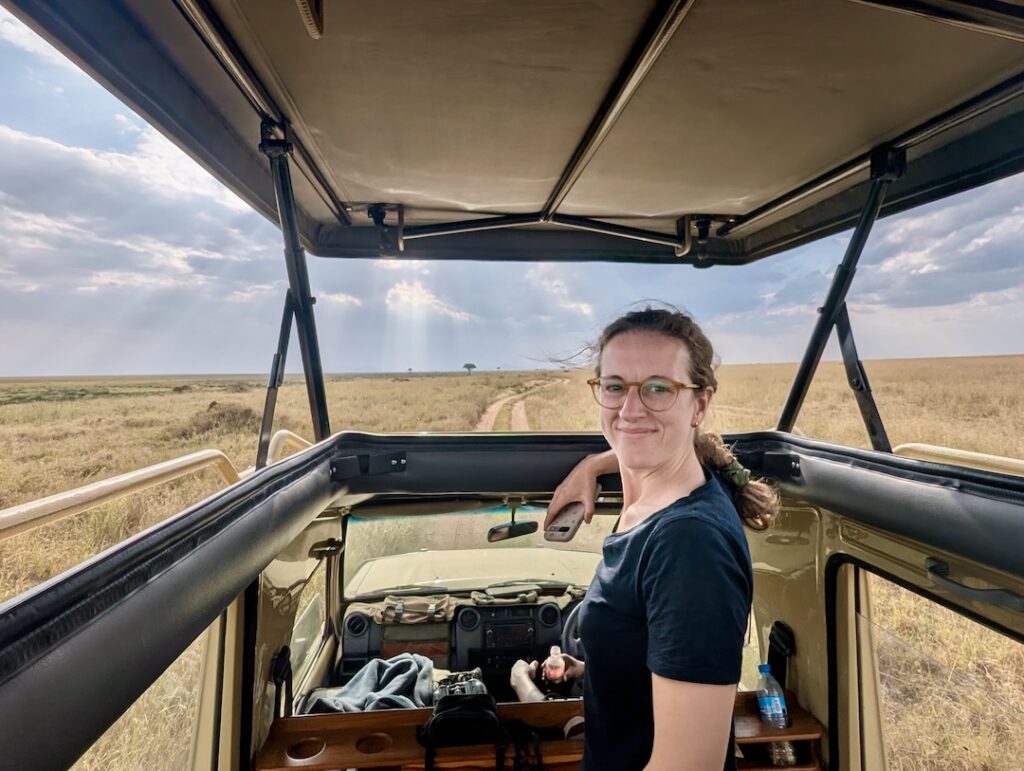
Our 5-day safari through Tanzania felt like stepping into a dream. Tanzania’s northern circuit is home to baobab forests scattered with elephants, Serengeti plains rippling with migrating herds, and misty crater rims where lions prowl in lush grass. We journeyed from the foothills of Arusha through Tarangire’s elephant country, to the boundless Serengeti and the mythical Ngorongoro Crater.
In this guide, we share our complete 5D/4N Tanzania safari itinerary — plus practical tips and insider advice so you can plan an unforgettable adventure of your own.
Day 1: Arrival and Arusha Highlands
We flew Turkish Airlines from London Gatwick, transiting in Istanbul before arriving at Kilimanjaro International Airport in the early hours — a 24-hour journey all in. VISAs were available on arrival ($50 USD), but the process was slow and slightly chaotic. Travellers may prefer applying online in advance, though in either case, patience is essential.
Our safari company (See Endless Adventures) had arranged a driver to meet us. We opted to skip Arusha proper and headed to Kutoka Lodge, nestled between Arusha and Tarangire. Though the drive was longer (about 90 minutes), it allowed for a shorter journey to Tarangire national park the next morning. The lodge itself was charming: brick-and-wood cabins, a peaceful garden alive with birdsong, and simple comforts — ideal after a long journey.
Stay: Kutoka Lodge — We highly recommend!
Driving Time: 90 mins


Day 2: Elephants and Baobabs in Tarangire
We were collected promptly at 7.30AM by our guide Ezekiel and reached Tarangire National Park by mid-morning. The landscape was dry and dotted with bulbous baobab trees. But the stars of the show? Elephants — in numbers we hadn’t imagined. We saw dozens, sometimes just metres away, along with giraffes, warthogs and three lions dozing by a river.
Lunch was taken at a designated picnic spot where monkeys provided cheeky entertainment. We continued game driving until mid-afternoon, then headed north to Africa Safari Karatu, a popular lodge en-route to the Serengeti. It’s functional rather than boutique — a bustling complex with decent buffet fare — but the views were expansive and the altitude refreshing after the heat of Tarangire.
Stay: Africa Safari Karatu — We wouldn’t recommend. It was too busy for us.
Driving Time: 3+ hours


Day 3: Into the Serengeti
After a hearty breakfast, we journeyed through the Ngorongoro Conservation Area, pausing to admire misty forests and Maasai herders guiding their cattle across ancient volcanic plains. Visibility was low at first — fog and altitude — but cleared as we descended towards the Serengeti.
We entered Serengeti National Park just after midday, and within moments had our first lion sighting. The afternoon turned into a storybook safari: elephants by the river, giraffes, zebras, lions with a fresh kill, and even elusive bat-eared foxes. The most magical moment of all unfolded just as the sun was going down: a leopard lounging in a tree with her cub.


We spent the night at Golden Safari Camps, a tented mobile camp in the Serengeti. The staff warmly welcomed us, and our accommodation was a canvas glamping tent with a private bathroom. The camp had good food, and sweeping views over the plains.
Stay: Golden Safari Camps — A real wild camp experience!
Driving Time: 10+ hours


Day 4: Dawn Balloon Ride & Predator Encounters
The day began at 3:30AM with a fright: animal noises near our unfenced tent had us pressing the emergency call button. Staff arrived in seconds, causing the animals to flee into the night. An unforgettable (if nerve-racking) moment.
At 4AM, we set off for our hot air balloon ride — a splurge at $500 USD per person, but the highlight of our safari trip. As the sun rose, we floated silently above the golden Serengeti, spotting hyenas, gazelles, buffalo, giraffe from the sky. The post-flight bush breakfast — omelettes, French toast, champagne — was superb.
Back on the ground, the wildlife encounters continued: three cheetahs, one giving a short-lived chase; countless giraffes, elephants, and a cheeky eagle snatching a catfish. The only frustration? A safari traffic jam near a cheetah sighting that drew 15 jeeps — a reminder of Serengeti’s growing popularity.
By mid-afternoon, we returned to camp, this time seeing it in daylight: just 15 tents set in perfect seclusion. A well-earned nap followed.
Stay: Golden Safari Camps
Driving Time: 4+ hours

Day 5: Ngorongoro Conservation Area
After an early breakfast, we set out for a final Serengeti game drive hoping to spot a rhino. The black rhinos in the Serengeti are heavily protected in a zone that’s inaccessible to vehicles. Occasionally, they wander out, so our guide took us as close as possible – but no luck. We did, however, see beautiful scenes of giraffe, elephant, and zebra herds all together.
After a picnic lunch, we continued on to Ngorongoro via a different road. The landscape was stunning: golden grasses, small flowering trees, acacia canopies, reddish-brown roads, and mountains in the background — almost otherworldly. We passed a couple of proper lakes, unlike the Serengeti’s more seasonal ponds.
Closer to Ngorongoro, the environment changed to cool highlands and dense forests, a striking contrast to the open plains of the Serengeti. Unlike a national park, Ngorongoro is a conservation area, meaning wildlife and people share the land. Along the way, we passed Maasai villages and watched herders guide their cattle and goats across the volcanic slopes, a reminder of the deep connection between community and wilderness here.
We arrived at our lodge, Ngorongoro Wild Camp, around 5PM. It overlooks Lake Eyasi and consists of tented rooms raised on platforms with permanent brick bathrooms. There are two types of rooms: basic (functional and fine) and premium. I’d recommend the premium option, as it has a glass front, wooden veranda, better views and upgraded bathroom. All rooms are large, with solar hot water and electricity.
Stay: Ngorongoro Wild Camp — a nice enough pit-stop.
Driving Time: 5+ hours

Day 6: Goodbye to the Wild
Our day began with zebras coming right up to our tent in the darkness. After a 5:50AM breakfast, we headed out to the mythical Ngorongoro crater rim. The Ngorongoro Crater is the world’s largest intact, unflooded volcanic caldera. The sides are so steep that giraffe can’t pass into the crater.
Once inside the vast crater, we saw lions (one unsuccessfully stalking wildebeest), zebra, elephants, flamingos, and, at last, buffalo — our first clear sighting of the trip. Wildebeest raced across the plain in a mini-drama reminiscent of the Great Migration. A lakeside barista, improbably operating from a converted truck, provided the best coffee of the week.
We exited the crater around midday, journeyed through Karatu and returned to Kilimanjaro Airport — a 5.5-hour trek with fading energy but full hearts. From here, we flew directly to Zanzibar that same evening.
Driving Time: 6+ hours


Safari Costs
We travelled in July 2025 and paid a total of USD $6,114 (approx £4,500) for a 5D/4N safari for two people. Our safari cost breakdown:
- 5D/4N safari — $2,330 per person
- Hot air balloon ride — $500 per person
- Flights to Zanzibar — $227 per person
Note: This price does not include our international flights from the UK to Tanzania, and it does not include our first night’s accommodation at Kutoka Lodge.

Practicalities
- Flights: Turkish Airlines via Istanbul worked well; approx £1,000 return from the UK.
- VISAs: Available on arrival ($50 USD), but apply online if you value efficiency.
- Accommodation: Where you stay is organised by the tour operator as part of your itinerary. However, we would recommend being particular about this and doing some of your own research. We adjusted some of the accommodations and were so glad we did.
- Wildebeest Migration:Experiencing the famous Mara River crossing requires at least 7 days / 6 nights on safari, given the extra travel time involved. Since our trip was shorter, we chose to skip the migration — but we certainly didn’t miss out on wildebeest. The Ngorongoro Crater delivered plenty of sightings, with herds grazing against the crater’s dramatic backdrop.
- Tips: You’ll need to tip your safari driver (who is also your guide). Expect to tip $10 per person, per day. Most accommodations also have tip boxes. You’ll need to bring enough cash for tips as there is nowhere to withdraw during the safari.
- Packing: Packing light is key. Essentials include:
- Linen or walking trousers, sun hats, warm layers (early mornings are cold)
- Bug spray with DEET
- Malarone (antimalarial pills – start before arrival)
- Binoculars
- Offline guidebook (internet can be patchy)
- Coffee if you’re particular. Though Tanzania grows its own coffee, you don’t get a freshly made brew at any of the safari camps we stayed at.